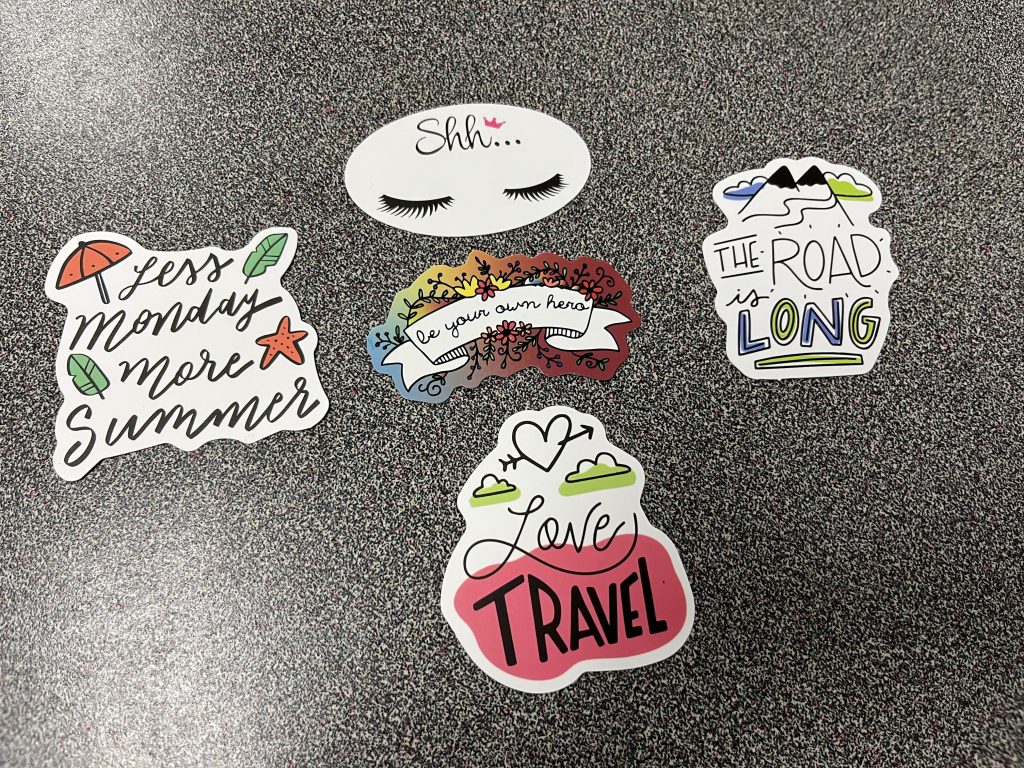
Cup Status: 1/4ish Full and Adding More Each Day
The further away from the end of the school year that I move, the fuller my cup is getting. I need time to rest and to take care of the many delayed projects around my house and the cleaning needs that have been put off and put off. I need time to sit and to relax, to nap, and to watch a variety of shows on HGTV and Food Network. I need time to get back to meal planning and menu-making, moving beyond daily food survival to actual planning for taste and time and enjoyment. I need time to implement projects and put sweat equity and creativity and my own personal touches into my home instead of imagining what they will look like when they are finished. I need time to decide I like my job again and to remember that I love my family and to remember that they are not just a part of my daily checklist of responsibilities and tasks to take care of before I finally get to, mercifully, fall into bed. I need time to enjoy the outdoors and complain about the heat and feel the dirt in my hands and watch my garden grow and say things to my children such as, “Please stop telling your sister that the skin walkers are going to get her if she doesn’t stop spraying you with the hose.” AND “Please stop calling your brother a gremlin and chasing him around the house with bright pink lipstick.” AND, to my oldest child, “Oh, you are alive. I thought that you had become a vampire. Nice to see you awake before four PM.” I really do love summer. I have grad classes I need to be working on and curriculum that I need to be updating, but for now, just for now, I am taking a well-deserved break.
While on that break, I have read two books that have been on my list for quite some time (I’ve actually read more than two books thanks to the wonderful world of audiobooks, but my focus is on these two in particular). One is Bossypants by Tina Fey and the other is Yes, Please by Amy Poehler. While reading both of them, I laughed out loud many times, which caused those around me to look at me strangely, as I often read in public places to pass the time. I was moved by endearing family stories, and I felt the connection to these two women as they described their awkward childhood selves. I listened to the tales of their career journeys and the outlook that they both have towards life, love, and work. I read about their experiences with motherhood and their husbands and the expectations society puts on women. And, I laughed. I contemplated. I was righteously angry. I wished I had a pen or pencil with me so I could make notes in the margins. But, most of all, I saw two women who told about their lives and, I believe, hoped someone would take something away from the experience of spending several hours with them during the reading journey. I am happy to say that I did. I wish that I could say that I connected with both women equally, but that is not the case. The titles of each book alone will tell anyone who knows me which person I identified with more. Here’s a hint: after many quiz retakes on Pottermore, I am indeed a Hufflepuff. If I were on the trip to Mordor in Lord of the Rings, I would be Samwise Gamgee. In the world of Myers-Briggs, I am an INFJ. The Advocate. I will ask for what I want and need, but it will be accompanied by a “please” or “if that’s ok” or something along those lines, and what I need usually is because someone else really needs it too, and I am just the one who asks for the good of the group. That’s me. So, Tina Fey’s “Bossypants” style didn’t fit me entirely, but there was one section in particular that did speak to me deeply. It is the section on the rules of improv. I am pretty sure that this section spoke to me for two reasons. 1. I am a teacher and teaching is a great game of both script and improv. I plan the broader strokes of the lesson, and then the minutiae fill themselves in as the students need them to be filled in and as their unique class and individual personalities add to it. I really think that teachers are great improvisers, but we can only be that way if we have a rock-solid plan in place first. Seems like a paradox, doesn’t it? 2. I used to be an icredibly structured, organized, difficult to get along with, has to be my way type of person. I now know this was because I needed control over my situation due to a severe lack of control over many traumatic events earlier in my life, but at the time I was a total bitch to live with. I am truly amazed that I have friends from that period of my life who still love me. Mini-soapbox: Therapy is wonderful. I believe that everyone can benefit from therapy. Please try to attend therapy if at all possible. It changed my life for the better.
Back to what I was saying before. So, Tina Fey’s “The Rules of Improvisation That Will Change Your Life and Reduce Belly Fat” really struck a chord with me, but before explaining why, I have to address something that bothered me throughout the book. Fey mentioned weight several times. I understand the struggle with weight. I really, really do. It has been a lifelong struggle for me. I also understand using humor and comedy as a coping mechanism or a way to address a difficult topic, but there were several moments, such as this title, that the weight reference didn’t seem necessary. It felt like a laugh grab, and I didn’t laugh…But, again, back to my main points. Fey says the first rule of improv is to, “…Agree. Always agree and SAY YES.” Now, it may not always be wise to agree and say yes, but Fey clarifies this point when she says, “…obviously in real life you’re not always going to agree with everything. But the Rule of Agreement reminds you to ‘respect what your partner has created’ and to at least start from an open-minded place. Start with a YES and see where it takes you.” This is such wise advice. If everyone would keep an open mind and would listen to others and see what it is that they are trying to create, the end product could be something wonderful. However, too often, we are thinking about what we are going to say or do next, so when we do speak or act, it doesn’t make any sense or connect in any way to what is currently happening or currently needed in a situation. For example, in education right now. Schools need support and funding from the government at the state and the federal levels, but instead of helping to solve the problems in the public school system, funding is being cut and redirected elsewhere. Teachers and students are setting the scene; the needs are obvious, but the reaction from the scene partner doesn’t make any sense in the context of what has already been established. There is no rule of agreement between the players, and therefore the scene has stalled. Another example of this in the classroom is when a student has a clear need. That need might be a need for clarification or a lack in pre-requisite/foundational knowledge. If the teacher misses the cue or misinterprets the cue or responds in exactly the same way that they already have, the learning will stall. The scene will end, and no one will be the better for it.
The second rule of improv is “…YES, AND. You are supposed to agree and then add something of your own.” For a teacher, this rule is beautiful. I am handed state standards, and I have a curriculum that I have a hand in helping to create from district-approved materials, but I still get to be the AND. There are elements of my job that I have to say “Yes” where there is little wiggle room, but the AND is where I get to shine. This is where I get to use the strategies and techniques that will spark engagement instead of boredom. This is where I will attempt to make the dry material interesting. This is also where I ask my students to be the AND. With their learning, I already expect them to say “Yes,” but to engage in the material and to make it their own, to increase the rigor and the understanding, they need to add to it, to level up. A +1 if you will (Thank you, John Antonetti, for teaching me this move). Tina Fey explains this rule further when she says, “…YES, AND means don’t be afraid to contribute. It’s your responsibility to contribute. Always make sure you’re adding something to the discussion. Your initiations are worthwhile.” It is this idea of fear that often holds people back from contributing, from taking a risk, from believing that they have anything worthy of contribution. This is what needs to be changed in education and in the classroom today. As a Hufflepuff, risk-taking is not my forte, but I do my best to push against the boxed expectations to seek the “why” of what I am being asked to do. I am always all in for my students, but when it comes to directives and mandates from on high, I often turn the question to them: Yes, and…how will I be supported? Yes, and…how is this beneficial to my students? Yes, and…will this replace something on my plate or add another precarious piece to the pile? So, say YES, AND add to the conversation, ask questions, be the spark of creativity or change, or at least make a big enough fuss that people ask if the whiny girl might have a point.
The third rule of improv is to “MAKE STATEMENTS. This is a positive way of saying ‘Don’t ask questions all the time.’…In other words: Whatever the problem, be part of the solution. Don’t just sit around raising questions and pointing out obstacles.” I hate to admit that my initial reaction to anything new that is going to be a challenge is to get irritated and then angry. I know that this happens because I am embarrassed by my lack of understanding and knowledge and because I do not like to be vulnerable in front of other people. Notice that I said, “In front of other people.” If I can work by myself with a set of directives or with a general direction or idea, I can explore and mess up and get lost and find my way back multiple times. I can get lost in the messiness of learning and discovery. Then, when I am confident that I have figured out the base needs of the situation or how to use the new program or whatever the situation calls for, that is when I am ready to collaborate. That is when I am ready to offer solutions to problems or to work with others to figure out how best to address a problem. This is because I have already struggled with it on my own and worked out somewhere between 3-10 potential options. I am now ready to run those ideas by someone and to get feedback and to hear their ideas and to give them feedback and for our ideas to blend or to throw out the bad ones and stick with the good ones, etc. I am not good at showing my “messy” at being in the midst of my questions. My insecurities and my need to process things over time and not in the moment are often the culprit for my knee-jerk reactions. I am a definite introvert. When I feel comfortable and safe with a person, then I can make statements. Then I can offer my solutions and defend them. I get flustered when I am grilled on the spot about a problem that needs a solution, unless it is a problem that I have previously encountered in some similar iteration. This is why, as mentioned earlier, teaching is a great game of improv, but for me, it is only great when it is blended with a well-planned-out lesson as well. I want to be able to make statements more often, but when I am pushed before I am ready or before I have figured it out for myself, I will only be capable of pointing out obstacles. It is my negative default, and I do not like it. However, once I am comfortable working with someone and I have built up a certain level of trust and understanding with them, then I can embrace this rule as well.
Rule number four of improv comforts me because “THERE ARE NO MISTAKES, only opportunities.” Even though there is comfort in this thought, I still must say in a melodramatic voice, “Alas, if only this were the case!” I have made plenty of mistakes as a teacher and as a co-worker. I have reacted too quickly to a student and misread a situation. I have gotten angry and flown off the handle during a meeting, only to be extremely embarrassed by my behavior later. I have gotten to school in the morning thinking that I had everything ready for the day only to realize that I had forgotten something very important. I have been so openly myself at times that I realized I probably should have reined the girl in just a bit. Each of these examples, vague as they are, is definitely an example of opportunities for reflection and growth. For connection with others and with myself. No one person is perfect, and teachers are no exception. It sure seems like society believes teachers should be perfect or that teachers should be held to a higher standard than people in other professions, but at the end of the day, teachers are regular people who are doing their best amidst the struggles and triumphs of daily life. So, while there may be opportunities in our actions, we wouldn’t have gotten there without the mistake first.
So, teaching is a game of improv that also has a plan, but ask any experienced teacher if every single day of the school year followed the lesson plan as it was intended, and I can guarantee they will say no. I am even willing to bet that the majority would say that less than half of their plans went exactly the way they had wanted them to. But ask them if a good portion of those days went even better than they had imagined, and I also bet that a good many of them will say yes. We can’t always plan the good, and we can’t always predict the bad, but what we do with both when they arise is what really matters. I just wish that this grumpy introvert could be alone each time a tidal wave of change hits so that she can process her emotions in real time without an audience, but I’m pretty sure that I picked the wrong career for that.


Leave a Reply